Vision
Turn vast, complex data into reliable insight that advances science, industry, and society.
The DANAIS (Data Nexus for Analytics & Intelligent Systems) Lab develops data and AI systems that turn large, complex datasets into reliable insight. Our research spans data management, analytics, and intelligent systems, with a focus on scalable and trustworthy technologies that support data exploration and decision-making. By bridging theory and real-world applications, DANAIS enables data-driven intelligence across scientific, industrial, and societal domains.
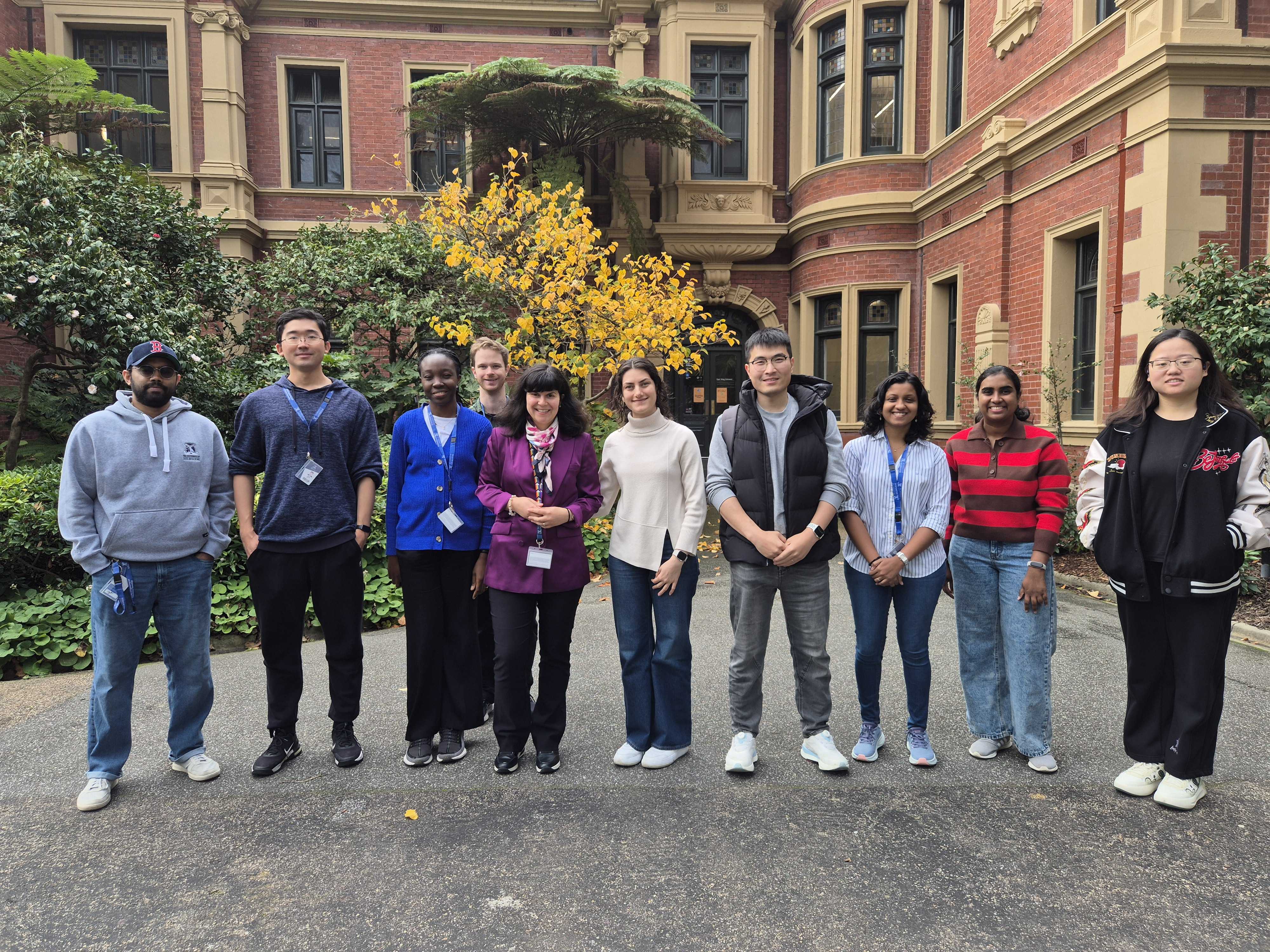
Turn vast, complex data into reliable insight that advances science, industry, and society.
Bridge theory and practice to build scalable, trustworthy data and AI systems for exploration and decision-making.
Rigor, responsibility, and elegance in systems that people can trust.
The DANAIS (Data Nexus for Analytics & Intelligent Systems) Lab develops data and AI systems that turn large, complex datasets into reliable insight. Our research spans data management, analytics, and intelligent systems, with a focus on scalable and trustworthy technologies that support data exploration and decision-making. By bridging theory and real-world applications, DANAIS enables data-driven intelligence across scientific, industrial, and societal domains.
Selected projects from our research program.
This project focuses on automatically optimizing database performance, reducing reliance on costly expert intervention. We investigate both physical design tuning (e.g., indexes and materialized views) and configuration tuning, leveraging techniques such as multi-armed bandits and large language models.
[ ICDE'21 , ICDM'21 , VLDB'22 , TKDE'23 , KAIS'23 , ICDM'24 , SIGMOD'26 , MLSys'26 ]
In this line of work, we exploit data distributions to construct compact, ML-based indexes for faster and more efficient data retrieval. We study the efficiency and practicality of existing learned index models and propose new algorithms suitable for on-disk deployment, a critical requirement for industrial adoption. This line of work also includes learned spatial indexes and spatial query processing, including semantic search.
[ ADC'20 , SIGMOD'23 , ICDE'24 , VLDB'25 , ADC'25 x 2 , ICDE'26 ]
This project investigates how to anticipate and preload relevant data to reduce query latency and improve exploration efficiency. We leverage data and query semantics to predict complex access patterns that arise during exploratory data analysis, particularly in scientific domains.
This project aims to predict query result sizes in order to improve query planning and execution performance. Our approach leverages copulas from statistical machine learning theory to model complex data correlations more accurately.
This project focuses on learning and recommending relevant next steps during interactive data exploration, guiding users through complex analysis workflows and reducing the cognitive and technical burden of exploratory analysis.
[ CIKM'25 ]
This line of work develops learning-based methods for traffic modelling, prediction, and optimisation in intelligent transportation systems. We leverage data-driven and machine learning techniques to support traffic management, routing, and decision making under dynamic and uncertain conditions.
[ SIGSPATIAL'20 , ECML/PKDD'20 , SIGSPATIAL'22 x 3 , IV'22 , TIST'23 , PAKDD'24 , SIGSPATIAL'25 ]










School of Computing and Information Systems, Faculty of Engineering and Information Technology, The University of Melbourne.
renata [dot] borovica [at] unimelb.edu.au
Open positions and how to apply.
700 Swanston Street, Carlton, Melbourne.